KUM · KUM0015
Litungu
Zoom with the + and − buttons, a double-click, a pinch, or Ctrl + mouse wheel.
Description
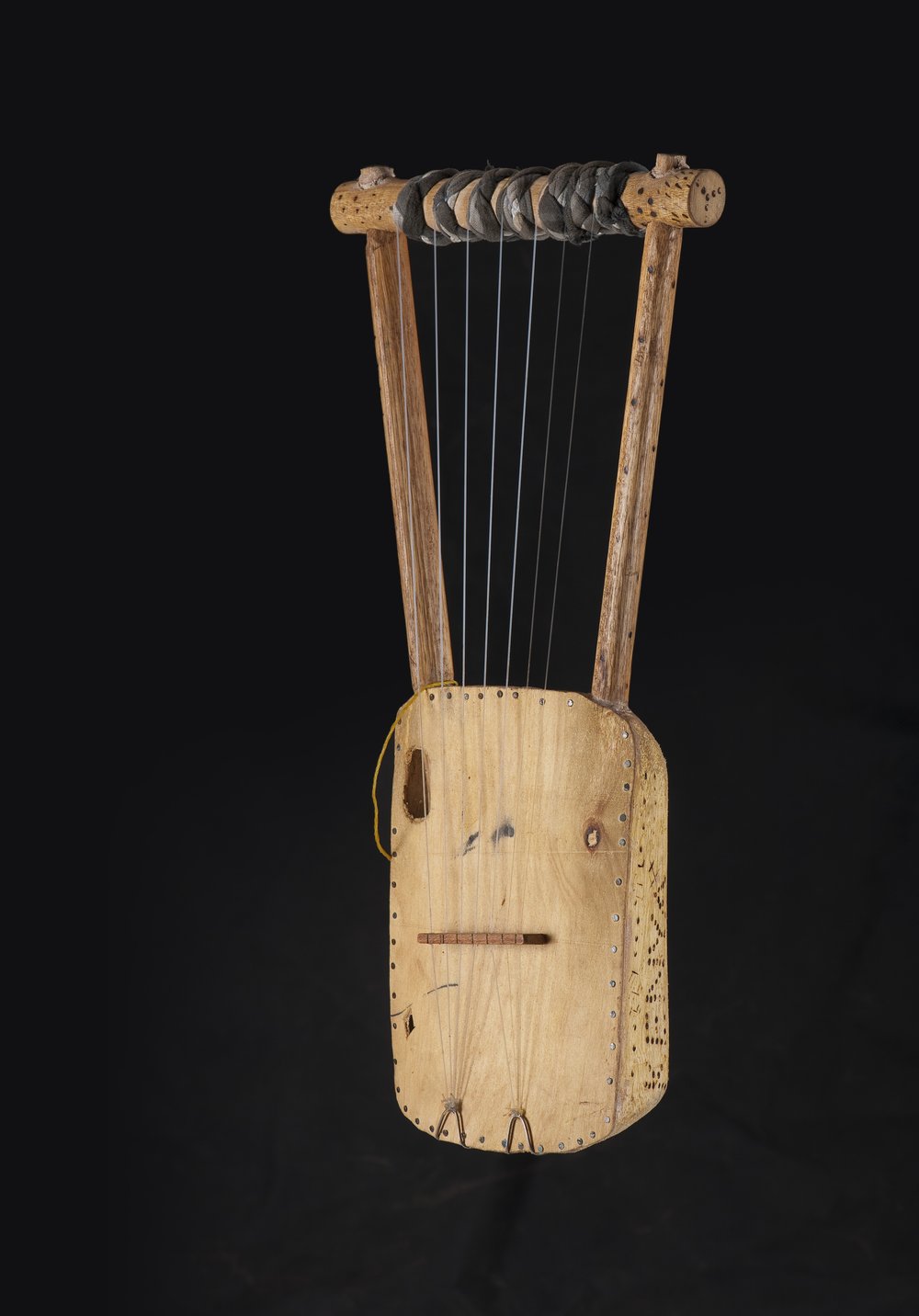
"Wooden (plywood) sound board instead of (lizard) skin. The sound box is made of carved out piece of wood. Nylon strings (they sued to be made of tendons). Movable bridge for transposition. The tuning depends on the vocal range of the singer. Tuned by tightening the string on the wooden crosspiece. Tuning knobs made of old cloaths; they used to be made of dried banana leaves. One oval sound hole showing one of the arms; small square hole for decoration. Small burnt geometric decorations. A yellow nylon chord for hanging the instrument on the wall. The litungu lyre provides melodic accompaniment to dances. The player is usually a soloist; he plays and sings at the same time. He is often accompanied by the ishiriri/silili fiddle and /or the eshimuka shaker. The litungu here is tuned diatonic: do, re, mi, fa, sol, la, do. Occasions: entertainment, harvest, competitions, beer drinking parties, child birth, story telling times." (Valentine Kihuha, Daniel Mabonga, Music Department, Kenyatta University, 22 November 2018)