NWHSC · 798
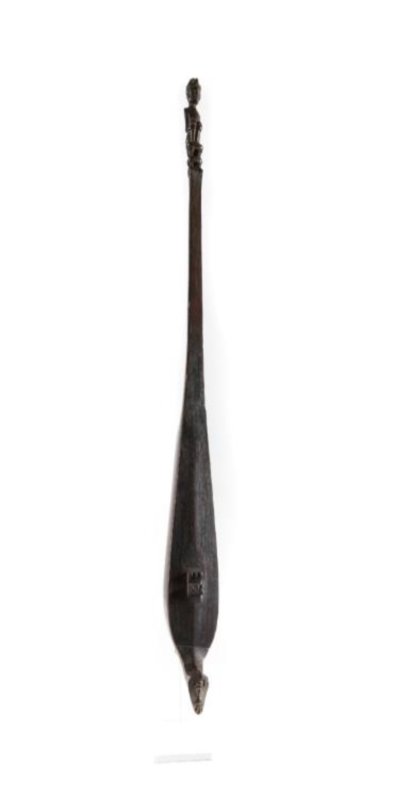
Hasapi
Zoom with the + and − buttons, a double-click, a pinch, or Ctrl + mouse wheel.
Description
The Batak developed a distinctive two-stringed musical instrument (hasapi), generally referred to as a lute. Hasapi usually have a seated figure as a terminal, here wearing an elaborate turban, and also a projection beneath the resonating chamber, which in this case takes the form of an inverted face. The instrument is carved from a single piece of wood except for the sound board, which is a replacement for the original. The back of the resonating chamber has an oval aperture and both ends of the neck have pierced scrolls which were formerly linked by a chain or cord. The two holes beneath the figure are for string-tightening pegs.